Quick summary
Business class to Amsterdam from the US runs anywhere from $2,100 to $5,500 round-trip depending on the airline, routing, and how early you catch a price drop. KLM and Delta are the dominant carriers on this route, and both have genuine strengths worth understanding before you book. BusinessClassSignal monitors AMS routes daily and alerts you when fares fall below your target price.
Why Amsterdam keeps showing up in my fare alerts
Amsterdam isn't the flashiest long-haul destination. It doesn't get the editorial love that Tokyo or Cape Town does. But Schiphol (AMS) consistently shows up in my fare alerts for one simple reason: it's one of the most price-competitive transatlantic routes out there.
Part of that is KLM's hub dominance at AMS. Part of it is the Delta partnership, which creates real competition on the same metal. And part of it is that Amsterdam is a connecting hub for a huge slice of Europe — so when you price a business class ticket to AMS, you're often also pricing a business class ticket to anywhere from Warsaw to Athens to Nairobi.
That last part is something a lot of people miss. I'll come back to it.
The main airlines flying business class to Amsterdam
There are really three meaningful options if you're flying from the US:
- KLM Royal Dutch Airlines — the flagship carrier, flying out of JFK, BOS, ORD, LAX, ATL, and a handful of others. Operates its own metal on most routes.
- Delta Air Lines — runs parallel service on several of these routes, often in codeshare or interline arrangements with KLM. The two are joint venture partners, so the cooperation runs deep.
- United Airlines — operates EWR-AMS with decent frequency, though it's a distant third in terms of product quality on this specific route.
I'll be honest: if you're flying business class specifically to Amsterdam, KLM or Delta are where I'd spend my time. United's Polaris product on the 767 can feel cramped on longer flights, and EWR-AMS isn't a short hop.
What is KLM World Business Class, exactly?
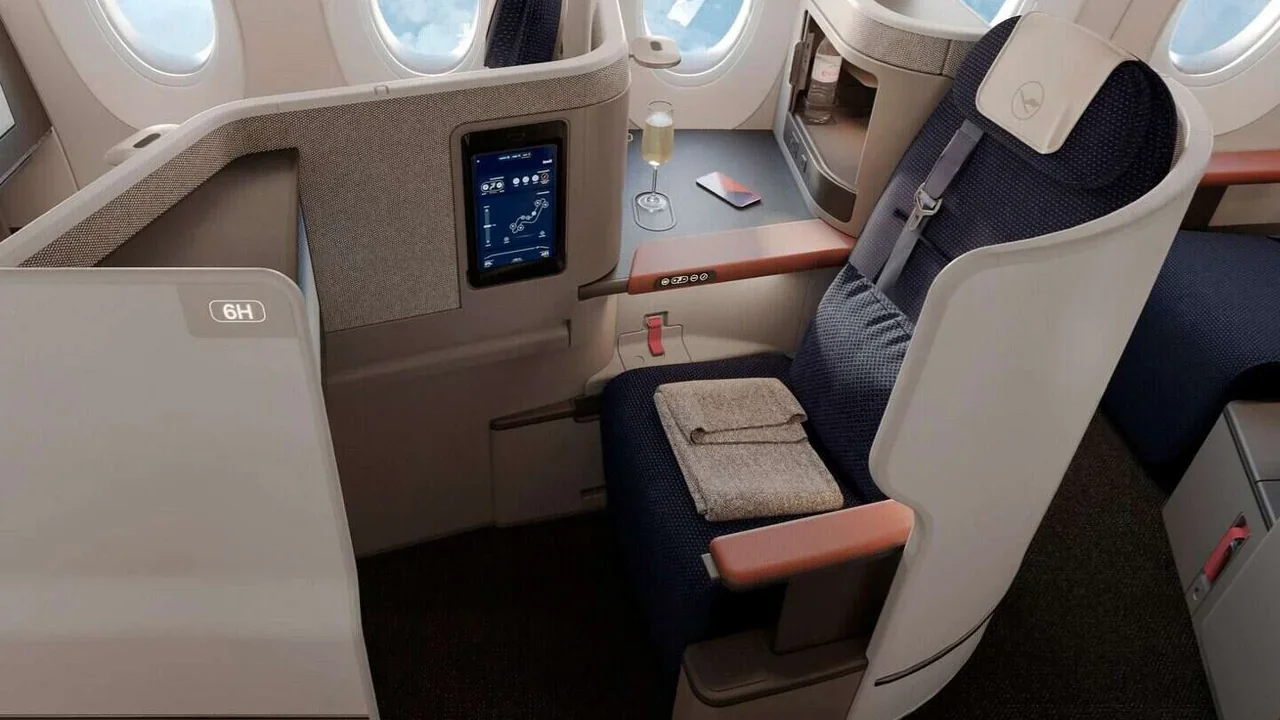
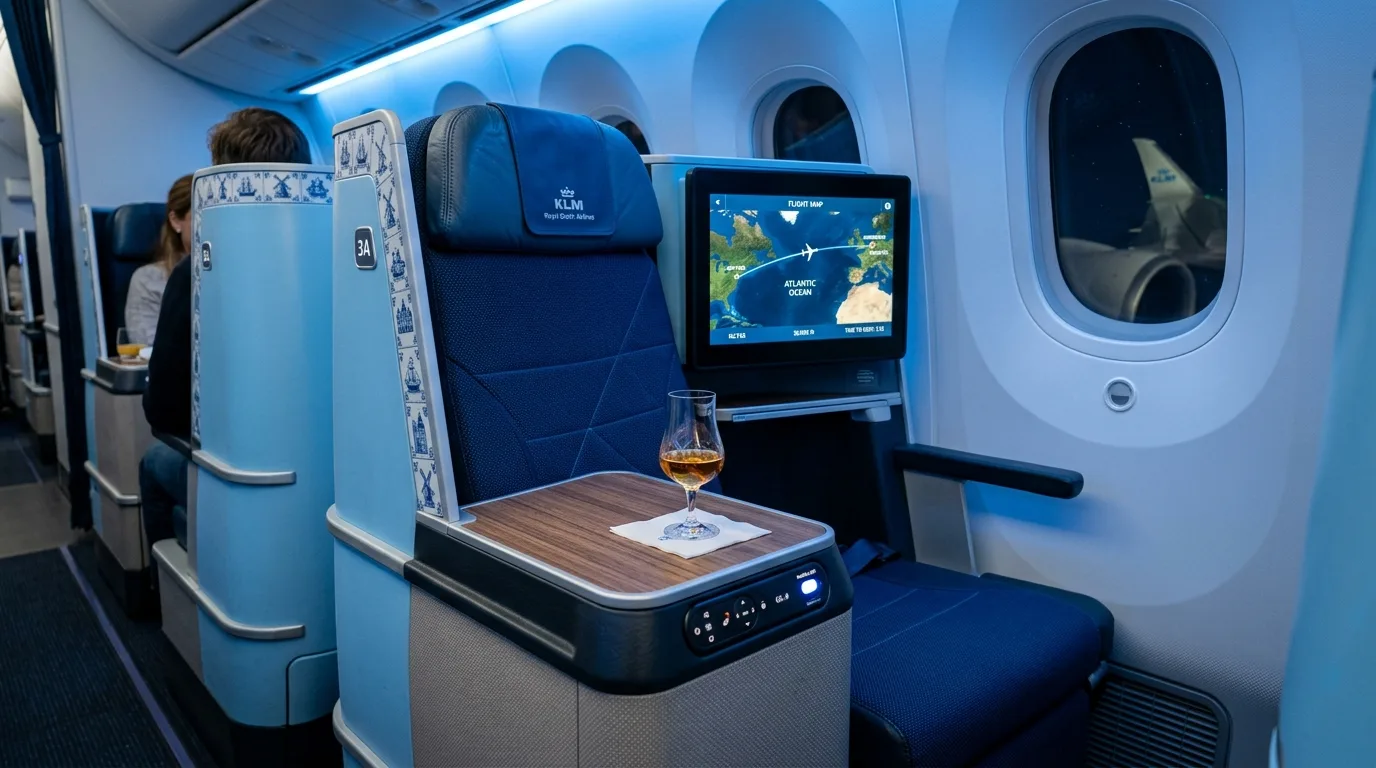
KLM World Business Class is the airline's long-haul premium cabin product. On the Boeing 787-9 and 787-10 (which handle most of the North American routes now), you get a 1-2-1 configuration in a herringbone layout — every seat has direct aisle access, which is the minimum I expect on a transatlantic flight at this price point.The seats fully recline to a flat bed, somewhere around 78 inches in length. The IFE screens are large and the content library is decent, though not as stacked as Emirates or Singapore. KLM doesn't pretend to be a luxury carrier, and I'd rather they didn't try — what they offer is a well-run, functional premium product with genuinely good Dutch food and wine service.
The food, actually, is worth calling out. KLM has long partnered with Dutch chefs on their business class menus, and I've had some of the better transatlantic meals in their cabin — stamppot-inspired dishes, Dutch cheeses, proper stroopwafels with the coffee service. It's not Michelin-star territory, but it's thought through.
The seat to ask for on KLM's 787
On the 787-9 World Business Class cabin, seats in rows 1-2 are the most private. Avoid the middle seats (2D/2G) if you're traveling solo — they're technically aisle-accessible but you're sitting next to a stranger with a divider between you. Fine for couples, slightly awkward otherwise.
How does Delta's business class compare on the Amsterdam route?
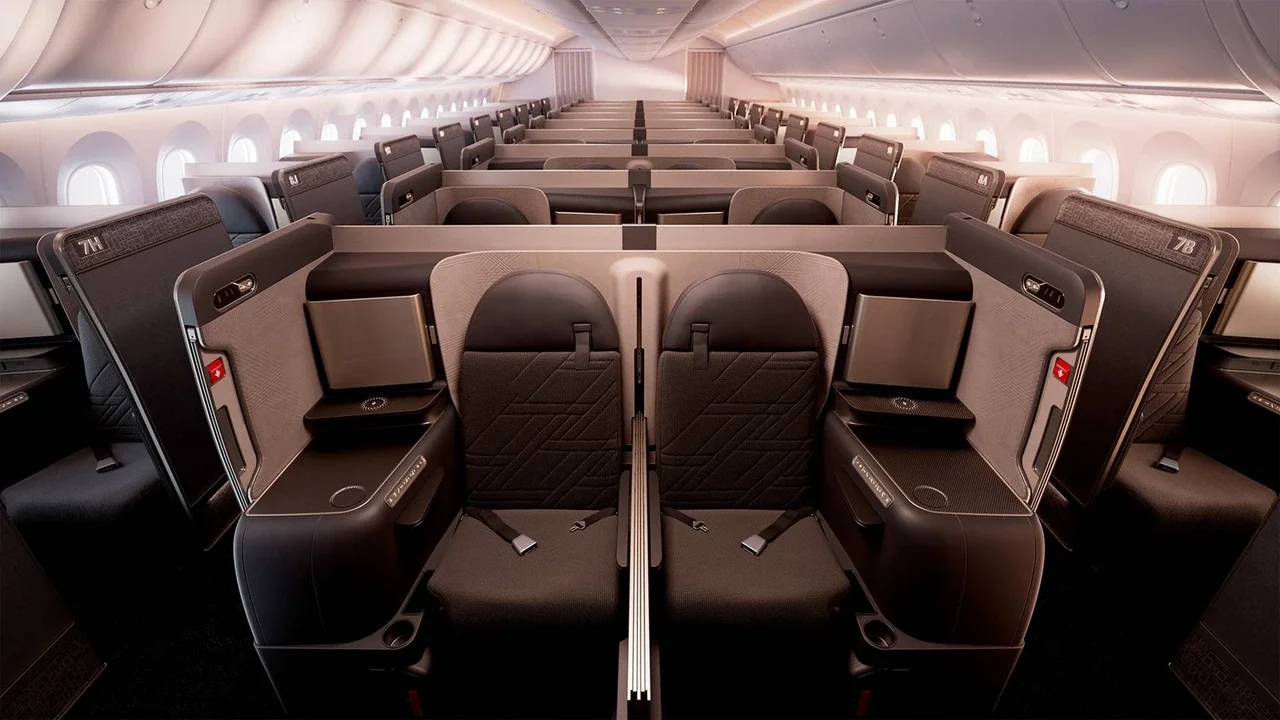
Delta's Delta One product on transatlantic routes is a mixed bag depending on which aircraft you get. On JFK-AMS, Delta typically operates the A330-900neo, which has their newer Vantage XL seats — these are genuinely comfortable, with a 1-2-1 layout and a proper privacy door on some configurations. The door is a nice touch.
What Delta does better than KLM: the Sky Club access at JFK, especially the Flagship Lounge if you're flying on a partner ticket. What KLM does better: the in-flight food service and, I'd argue, the general warmth of the cabin crew on most flights I've taken.
The Delta-KLM joint venture means your ticket might say Delta but you end up on KLM metal, or vice versa. Always check the operating carrier before you book — the products are different enough to matter.
Using Amsterdam as a hub for deeper Europe connections

Here's the thing most people overlook when they price business class to Amsterdam: Schiphol is one of the best-connected airports in Europe. KLM flies to over 90 European destinations from AMS, and when you book a business class ticket from the US through to a final European destination, you're often getting the connecting leg included in the fare.
I've booked JFK-AMS-Prague in KLM World Business Class for less than a standalone JFK-LHR ticket. The math doesn't always work out, but it's worth checking. BusinessClassSignal monitors these through-fares on routes like AMS-Warsaw, AMS-Copenhagen, AMS-Budapest — and the alerts catch them when they drop.
If your actual destination is somewhere in Central or Eastern Europe, always price the AMS connection before assuming a direct or London-routed flight is cheaper. You might be surprised.
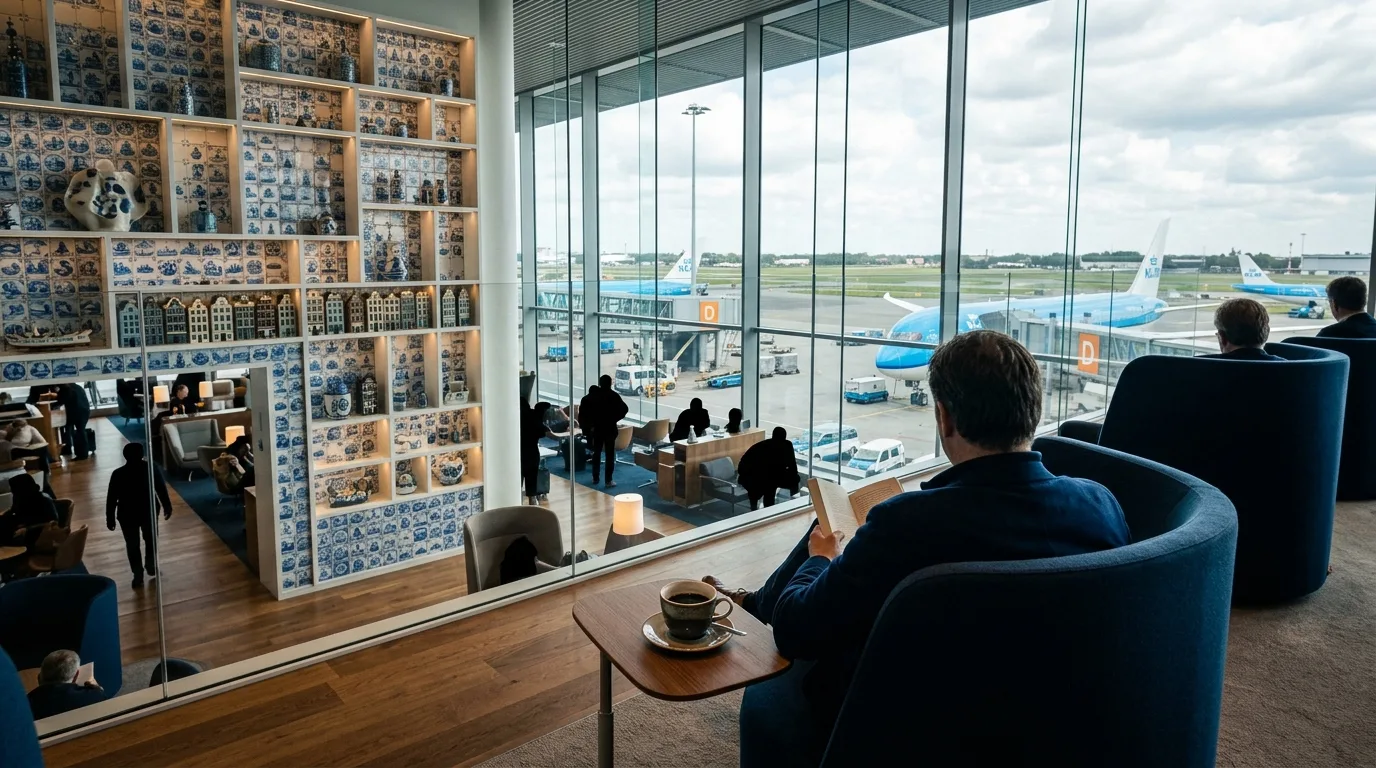
The Schiphol airport experience itself is worth a word. It's a large airport, but it's genuinely well-organized. KLM's Crown Lounge at the D/E pier is solid — better food than most European hub lounges, a decent wine selection, and the Delft Blue miniature houses filled with Dutch gin are a nice touch if you're into that sort of thing. The lounge can get crowded in the morning bank, though, which is annoying when you've paid for a $2,500 ticket.
When business class fares to Amsterdam actually drop
I've been watching this route for years. There are patterns, though they're not as reliable as the airline pricing blogs would have you believe.
Generally speaking:
- Tuesday and Wednesday departures tend to be cheaper than Friday or Sunday, which are peak leisure days on transatlantic routes
- January through early March is the softest period for demand, and that's when I've seen the best sustained fares — not flash sales, but quietly low published fares that sit there for a few days
- October can be surprisingly good, especially mid-month after the fall half-term rush in Europe dies down
- Summer (June-August) is brutal. Don't expect deals. This is when families and leisure travelers pile in, and the airlines know it
The other thing that moves AMS fares: sale events. KLM runs periodic promotions, often tied to Dutch public holidays or their own commercial calendar. These are genuinely worth catching, but they're short-lived — sometimes 48 hours, sometimes less. That's where fare monitoring earns its keep.
Watch the fuel surcharges
KLM and Delta both levy significant fuel surcharges on transatlantic business class tickets. A fare that looks like $2,100 can land at $2,600 once carrier-imposed surcharges are added. Always check the full fare breakdown before you get excited about a "deal."
How BusinessClassSignal tracks this route
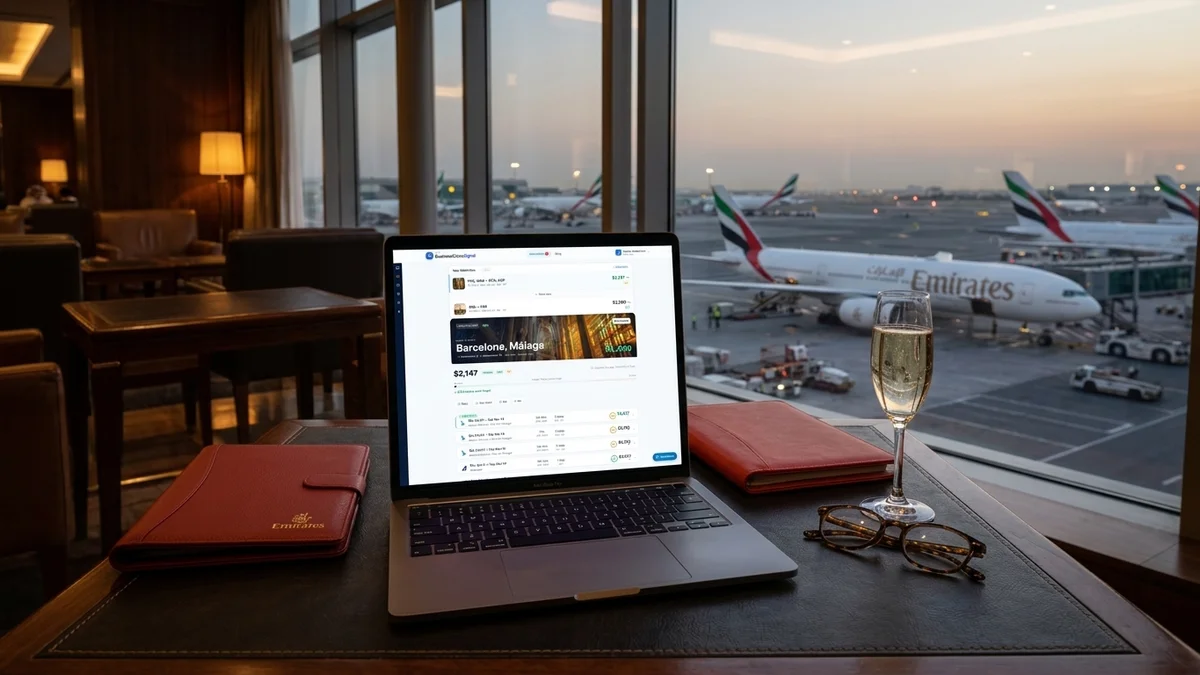
BusinessClassSignal is a fare monitoring service that scans business class routes — including multiple US gateways to Amsterdam — twice daily. You set a target price for your route and travel window, and you get an email alert when fares drop below that threshold. No algorithm-speak, no gamification. It just watches and tells you when something changes.
For the AMS route specifically, I've set up alerts across JFK, BOS, and ORD because those three tend to move independently. A sale that doesn't touch JFK will sometimes be reflected in the Boston fare, especially on KLM's thinner routes. Here's how the monitoring system works if you want the specifics.
The service monitors over 800 business class routes. AMS is one of the more active ones in terms of fare movement, which is either great news or maddening depending on your flexibility.
Set your alert threshold about 15-20% below the current published fare, not at the lowest price you've ever seen. That lowest price might have been a one-day error fare from two years ago. Set a realistic target and you'll actually catch deals instead of waiting forever.
Positioning flights and the mixed-cabin question
Not everyone lives near a gateway city with direct service to Amsterdam. If you're in, say, Nashville or Phoenix, you're probably connecting domestically before your transatlantic segment. That positioning flight is worth thinking about carefully.
Some people book it all as one ticket. Others position themselves separately — fly economy or first to JFK or BOS the day before, stay the night near the airport, and board their international flight rested and without the risk of a missed connection tanking the whole trip. It adds a night of hotel, but I've never regretted it on a long-haul trip.
If you're flying family or a group where some people are in business and others in economy — or if you want to monitor those positioning economy fares separately — FlightKitten is worth knowing about. It's built by the same team that runs BusinessClassSignal, monitors economy fares across 220+ airlines, and alerts you when prices drop below your target. Starts at $4.99/month. I use it for exactly this kind of situation.
What the Amsterdam business class experience is actually like, start to finish
I've flown this route four times in business class — twice on KLM, once on Delta, once on a KLM-operated Delta codeshare that I didn't realize was KLM until I got to the gate. That last one worked out fine, for the record.
Check-in at JFK for KLM is in Terminal 4. The dedicated business class check-in is fast and the staff are generally efficient. You'll clear security and then have access to KLM's partner lounge — usually the Air France lounge in T4, which is fine. Not exceptional. The food is better than the typical US airport lounge, the seating is comfortable, but it's not the Crown Lounge at AMS. Manage expectations.
The flight itself from JFK is roughly 7 hours. On an overnight departure (which most of them are), you board, get your pre-departure drink, and then most of the cabin goes to sleep within an hour. The KLM cabin crew are professional and unobtrusive — they won't hover, but they're responsive when you want something. I've always found the Dutch directness in the service style refreshing compared to the forced cheerfulness you sometimes get elsewhere.
Arrival at Schiphol is usually smooth. The airport is large but well-signed, and if you're connecting onward, the transfer process is among the cleanest in Europe. Immigration for non-EU passengers can queue up in the morning bank, but business class passengers have dedicated lanes that actually move.
Booking strategy: what I'd actually do
If I were booking business class to Amsterdam right now, here's my honest approach:
- Set a fare alert on BusinessClassSignal for my preferred route and a travel window of at least 6-8 weeks. Flexibility is the single biggest lever you have on price.
- Check both KLM and Delta directly, not just through aggregators. The Delta-KLM JV means fares can be filed differently, and sometimes one partner's website shows a lower fare than the other.
- Look at the through-fare if my actual destination is anywhere in Central or Eastern Europe. AMS as a connecting hub is genuinely underused by American travelers.
- Watch January and February if I have any schedule flexibility. I've seen JFK-AMS-JFK in business class for $2,100 in February. Those fares exist.
- Don't wait for perfection. The $1,800 fare you're hoping for might never come. The $2,300 fare that's sitting there right now is still 40-50% below the standard published price.
Miles and points angle
KLM is a Flying Blue partner, and business class tickets to AMS can be redeemed for 50,000-65,000 Flying Blue miles round-trip during promo awards. Delta SkyMiles can also be used on KLM-operated flights. If you're sitting on a pile of either currency, AMS is one of the better redemptions in the transatlantic market right now. We've written about Flying Blue award sweet spots if you want to go further down that road.
The routes worth monitoring right now
BusinessClassSignal currently tracks business class to Amsterdam from the following US gateways. These are the routes where fare drops tend to be most meaningful:
- JFK-AMS — highest frequency, most competitive fares, KLM and Delta both operate
- BOS-AMS — KLM's Boston service is a sleeper hit for fare drops, especially in shoulder season
- ORD-AMS — United and KLM both fly this, which creates genuine competition
- ATL-AMS — Delta's home hub, well-served, and Delta One fares here can be aggressive
- LAX-AMS — longer haul, different aircraft sometimes, but the fares can be surprisingly good
The best thing you can do right now, honestly, is start monitoring this route and set a realistic target. You'll know within a few weeks whether the market is moving or flat. Either way, you'll stop wondering and start knowing.
Monitor business class fares to Amsterdam — catch the next price drop before it disappears
Try Free for 7 Days