
The SFO to Paris business class rundown you actually need
I've flown this route more times than I can easily count — somewhere north of fifteen segments over the past decade, across multiple carriers and configurations. And every time someone asks me which airline to book for SFO to Paris business class, I give them the same answer: it depends what you actually care about, because the gap between the best and worst options on this route is wider than most people expect.
Paris is one of the most competitive transatlantic routes out of San Francisco, which is genuinely good news. Competition keeps prices honest, and the route attracts enough premium demand that airlines tend to put their better equipment on it. But "better equipment" covers a lot of ground, and not every business class seat between SFO and CDG is worth the money.
Here's what I know from actually flying it.
Air France: still the one to beat on this route
Air France operates their Boeing 777-300ER on SFO–CDG, and the business class cabin — what they call Business — is genuinely good. The seats are in a 1-2-1 configuration, which means every passenger gets direct aisle access. No climbing over your neighbor at 3am. That alone puts it ahead of a lot of competitors.
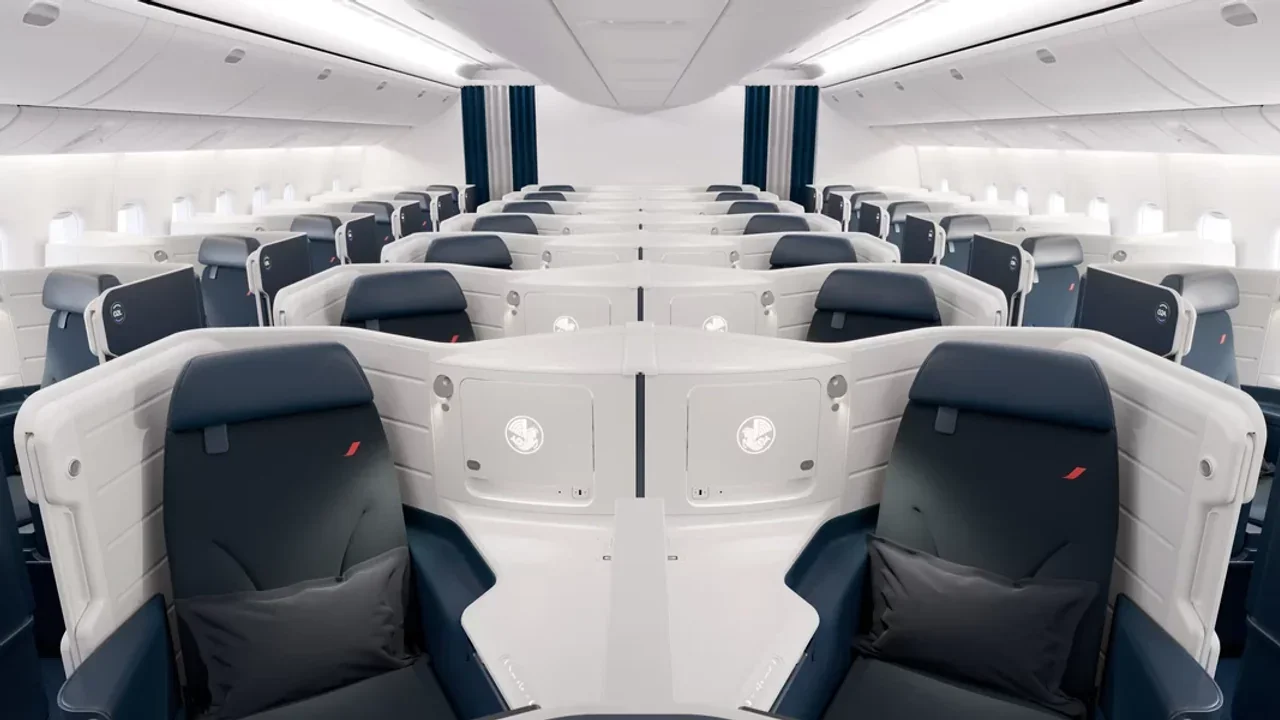
The seat itself reclines to a fully flat bed, around 77 inches when extended. Window seats are slightly more private if you're traveling solo; middle pairs work well for couples because you can lower the divider between seats 2A and 2B-style pairings. I'd avoid the last few rows of the business cabin — they're closer to the galley and you'll notice it on a night flight.
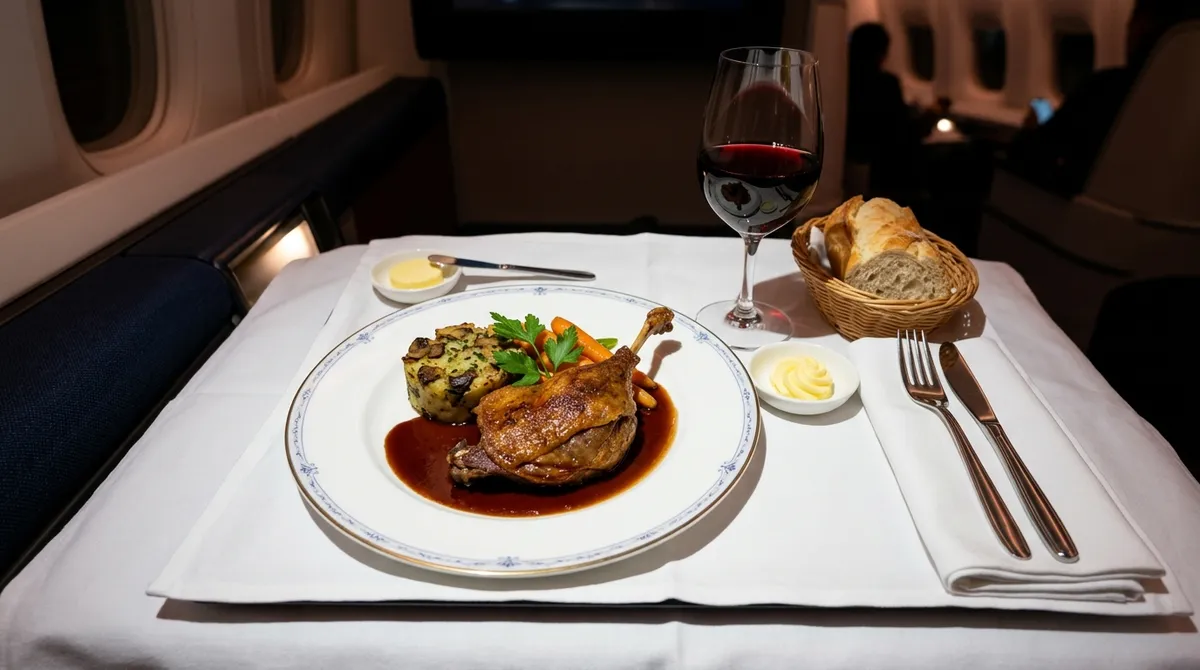
The food is where Air France earns its reputation. I've had a decent duck confit in seat 5A on the CDG-bound red-eye that I still think about. The cheese course is real — an actual selection, not a wrapped triangle of something sad. The wine list rotates and leans heavily French, which is either obvious or a selling point depending on your perspective. Dinner service is properly paced, not rushed, and the crew on this route tend to be experienced and attentive without being hovery.
The lounge situation at SFO is the one genuine weak point. Air France uses the Lufthansa Business Lounge in the international terminal, which is fine — comfortable seating, reasonable food, decent enough wine — but it's not the Paris La Première experience some people expect to carry through the whole trip. Don't show up two hours early expecting something remarkable. Have a drink, eat something, and board.
Pricing on Air France fluctuates considerably. I've seen SFO to Paris business class fares as low as $2,400 round-trip during slow periods (typically late January through mid-March, and again in October), and as high as $8,000+ during peak summer. The sweet spot for value tends to be shoulder season departures — you get the full product without the peak surcharge. If you start monitoring this route with an alert set around $2,800–$3,200 round-trip, you'll catch the reasonable drops without missing them.
United: competent, occasionally frustrating
United operates this route too, and I want to be fair here: the experience has improved. But it depends heavily on which aircraft you get.
The good version is the Polaris cabin on United's 787-9 or 777-200. The Polaris seat is a proper forward-facing flat bed, 1-2-1 in most configurations, with a decent mattress pad and real bedding. I've slept well on it. The food is better than it was four years ago — the short rib braised option at dinner is usually the call, and the ice cream sundae service has become something of a cult item among frequent flyers, which sounds ridiculous but is genuinely a nice touch at 35,000 feet.
The bad version is if you get stuck on an older reconfigured 767. The seats are narrower, the IFE screen is smaller, and the whole thing feels like a product from a different era. United has been retrofitting these but hasn't finished, and SFO–CDG doesn't always get the newest metal. Check the aircraft type when you book — it matters more than the price difference between fare classes.
United has one advantage Air France doesn't: if you're a Star Alliance frequent flyer, or you hold United MileagePlus status, the earning rates and upgrade pathways can make it the smarter loyalty play. Saver awards on this route through MileagePlus can be had for 70,000–80,000 miles one-way in Polaris if you're patient, which is reasonable value.
The Polaris Lounge at SFO is in the international terminal, past security. It's one of the better United lounges in the system — the hot food station is properly maintained, the bar is stocked, and there's a noodle bar that I find myself going back to. If your flight boards from the A gates, factor in the walk; it's not close.
Connecting options worth considering
Most people book SFO to Paris nonstop, and honestly, that's usually right. But there are situations where a connection makes sense — either because the price is significantly lower, or because the connecting carrier offers a meaningfully better product.
The most interesting one is Lufthansa via Frankfurt or Munich. Lufthansa's business class is solid without being flashy — the seat is good, the food is German and reliable, and the Munich hub connection in particular is efficient if you time it right. Munich also has the Lufthansa Business Lounge in Terminal 2, which is one of the better transit lounges in Europe. The issue is that connecting through a European hub adds two to three hours to your total journey, and Frankfurt CDG connections can feel rushed depending on your inbound delay.
Swiss via Zurich is another option I've taken twice. The product is genuinely underrated — Swiss Regional on the transatlantic leg runs an excellent seat, the crew is professional, and Zurich's compact airport makes connections less painful than you'd expect. The SFO–ZRH–CDG routing adds mileage but if the fare is $1,500 less than a nonstop, the math can still work in your favor.
British Airways via London Heathrow is an option I mention mostly to say: I'd only take it if the price is substantially lower and you have time to burn. The Club World seat is the old herringbone design on many aircraft — you fly angled and not fully forward-facing — and LHR connections are notoriously tight if there's any delay on the inbound. The T5 lounge is fine, the coffee is mediocre, and the whole experience has a slightly tired quality to it that I don't think the price usually justifies.
You can see how all these routing options compare on our SFO to CDG route page, including which carriers are currently showing the best pricing windows.
If you're considering a mixed itinerary — maybe flying business one-way and economy the other — it's worth knowing that FlightKitten monitors economy fares across 220+ airlines the same way we monitor business class: you set a price target, and it alerts you when something drops below it. About $4.99 a month. If you're doing a long trip and want to save on one direction, it's a practical tool to have running in the background.
What to expect when you land at CDG
Charles de Gaulle is a genuinely strange airport and nobody warns you about this enough.
Terminal 2E is where most long-haul international arrivals come in, including Air France from SFO. The immigration queue at CDG can be punishing — I've cleared in 12 minutes and I've waited 90. There's no reliable pattern. Business class gets you off the plane first, which helps, but it doesn't get you through the EU/non-EU passport control faster unless you're an EU citizen or have a registered EU identity document that works with the automated gates.
The automated ePassport gates (called "Parafe" in France) are available to US citizens holding biometric passports, and they can cut your wait time significantly. Enrollment is technically required but in practice I've walked up to the machines without pre-enrollment and been processed. Your experience may vary. Worth attempting before you queue for the staffed desks.
After immigration, baggage in 2E comes out on the lower level. The CDG taxi queue can be long and the fixed-rate taxis to central Paris run about €56 to the Right Bank and €62 to the Left Bank — those are the regulated rates, set since 2016. Uber works at CDG and is usually faster to get to; the pickup point is in the arrivals parking area. The RER B train is cheap (€11.80) and takes about 35 minutes to Châtelet-Les Halles if your hotel is near a metro connection, but it's not great with heavy bags at rush hour.
One thing I'd add: if you're arriving overnight and your hotel check-in isn't until afternoon, the Air France lounge in Terminal 2F (accessible before security on the departures level) is not available to you as an arrival passenger. Don't make that mistake at 7am when you're tired.
When prices actually drop — and how to catch them
SFO to Paris business class fares have a rhythm, and once you recognize it, you stop overpaying.
The clearest pattern I've tracked over the years is that Air France in particular releases discounted business class inventory on Tuesday and Wednesday evenings Pacific time, often for travel in the 3–8 week window. These aren't advertised sales. They're yield management adjustments — the airline is trying to fill seats that aren't moving — and they disappear within 24 to 48 hours. If you're checking manually, you'll miss most of them. That's just the reality.
The other pattern worth knowing: January departures from SFO are often the cheapest of the year. Not just cheap for business class — actually cheap. I've seen verified round-trip fares under $2,200 in mid-January on Air France. Paris in January is cold and grey and the museums have no lines. Personally, I'll take that trade.
This is where I'll mention that BusinessClassSignal runs 24/7 monitoring on routes like this one, and the 14-day free trial is genuinely free — no card required to start. You set your price target for SFO–CDG business class, and when something drops below it, you get an email. The system checks fares multiple times per day, which is the only realistic way to catch the short-window drops. If you're serious about flying this route in business without paying full fare, it's worth having running. You can see how the monitoring system works if you want the specifics before signing up.
The other thing the monitoring catches is mistake fares — genuine pricing errors that sometimes appear briefly on transatlantic routes. They're rare, maybe a handful per year on this corridor, but they do happen. Last year there was a brief window where Air France business class from SFO to CDG showed at $1,100 round-trip before being corrected. Subscribers caught it. Manual checkers didn't.
A few things nobody tells you before you book
Seat selection matters more on this route than people realize. On the Air France 777-300ER, rows 1 through 3 in business are the "La Première" buffer zone — the seats are slightly wider and the cabin feels less crowded. Rows 7 and 8 are near the forward galley, which can be noisy during boarding. Middle seats in the 2-4-2 section (if you're on an older configuration) should generally be avoided unless you're traveling with a companion.
On United Polaris, the window seats in odd rows face the window directly, which some people love for privacy and others hate because you're slightly turned away from the aisle. Even-row window seats face inward toward the aisle. Try both before you develop a strong preference — it's a matter of taste.
CDG to Paris on arrival is faster by Uber than most people expect at off-peak hours. At 6am on a weekday, you can be at a central Paris hotel in under 40 minutes from the terminal exit. At 8am on a Friday afternoon, plan for an hour and a half minimum.
And one last thing: if you're flying Air France and have a connection within Europe from CDG, the domestic terminal T2F is attached to 2E but the walk is longer than the signage suggests. Build in time. The French airport experience is efficient when it works and infuriating when it doesn't, and the difference often comes down to whether you gave yourself enough margin.
Browse the full browse all routes page if you're comparing this to other transatlantic corridors — sometimes JFK or ORD routings offer better pricing windows even after you factor in a domestic positioning flight.